How Many Kilowatts Does a House Use? A Practical Savings Guide

Power outage preparation starts with a short list: know your local hazards, choose a safe place, protect essential supplies, and decide which electrical loads truly matter. A storm may interrupt service for minutes or days. A tsunami or tornado may leave almost no time to make decisions. Heat and cold add health risks when climate control stops.
This guide brings those problems into one plan. It covers outage duration, the Bahamas hurricane calendar, tornado timing in Oklahoma and Texas, tsunami evacuation, indoor temperature safety, and battery backup for lights, communications, fans, and compatible appliances. The priority is always people and evacuation. Portable power only supports the plan; it never replaces an official warning, a safe shelter, or a local evacuation order.
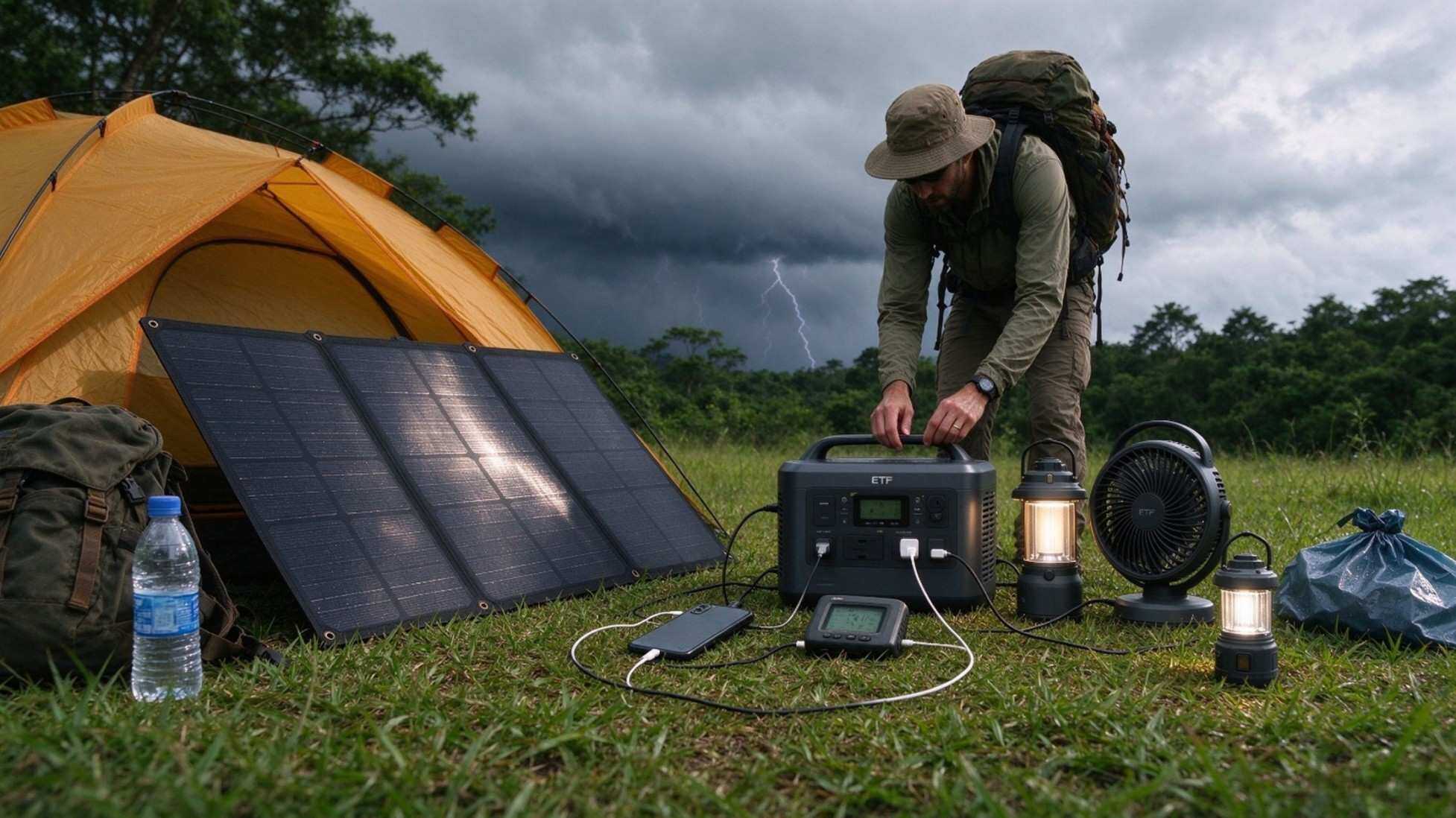
Extreme weather planning calendar
The dates below are preparation windows, not promises about when an event can occur. Tornadoes and tropical cyclones can occur outside their most active periods. Check local forecasts and emergency management notices throughout the year.
|
Hazard and place |
Main planning window |
What to do before it |
Important limit |
|
Atlantic hurricanes, including the Bahamas |
Official season: June 1-November 30; activity usually peaks around September 10 |
Review evacuation routes and insurance; test alerts and backup power before June |
A storm can form outside the official dates |
|
Oklahoma tornadoes |
Prepare before spring; March-June is the main practical readiness window, with May typically central to planning |
Identify a shelter, set multiple alert methods, and keep shoes and head protection nearby |
Tornadoes can occur in other months |
|
Texas tornadoes |
Prepare before spring; much of the state is most active in spring, while regional timing varies |
Use the local National Weather Service office's climatology rather than one statewide date |
Texas is too large for a single precise season |
|
Tsunami-prone coast |
Year-round |
Learn the hazard zone and practice a walking route to high ground or inland |
Natural signs may arrive before an official alert |
|
Heat or winter outage |
Before the local hot or cold season |
Identify a powered public location and arrange checks for vulnerable people |
Indoor conditions, not the calendar, determine when to leave |
The National Hurricane Center's climatology gives the Atlantic season as June 1 through November 30 and identifies September 10 as the historical activity peak. The National Weather Service tornado data index links separate monthly records for Oklahoma and western North Texas. Both records concentrate heavily in spring, but neither creates a safe off-season.
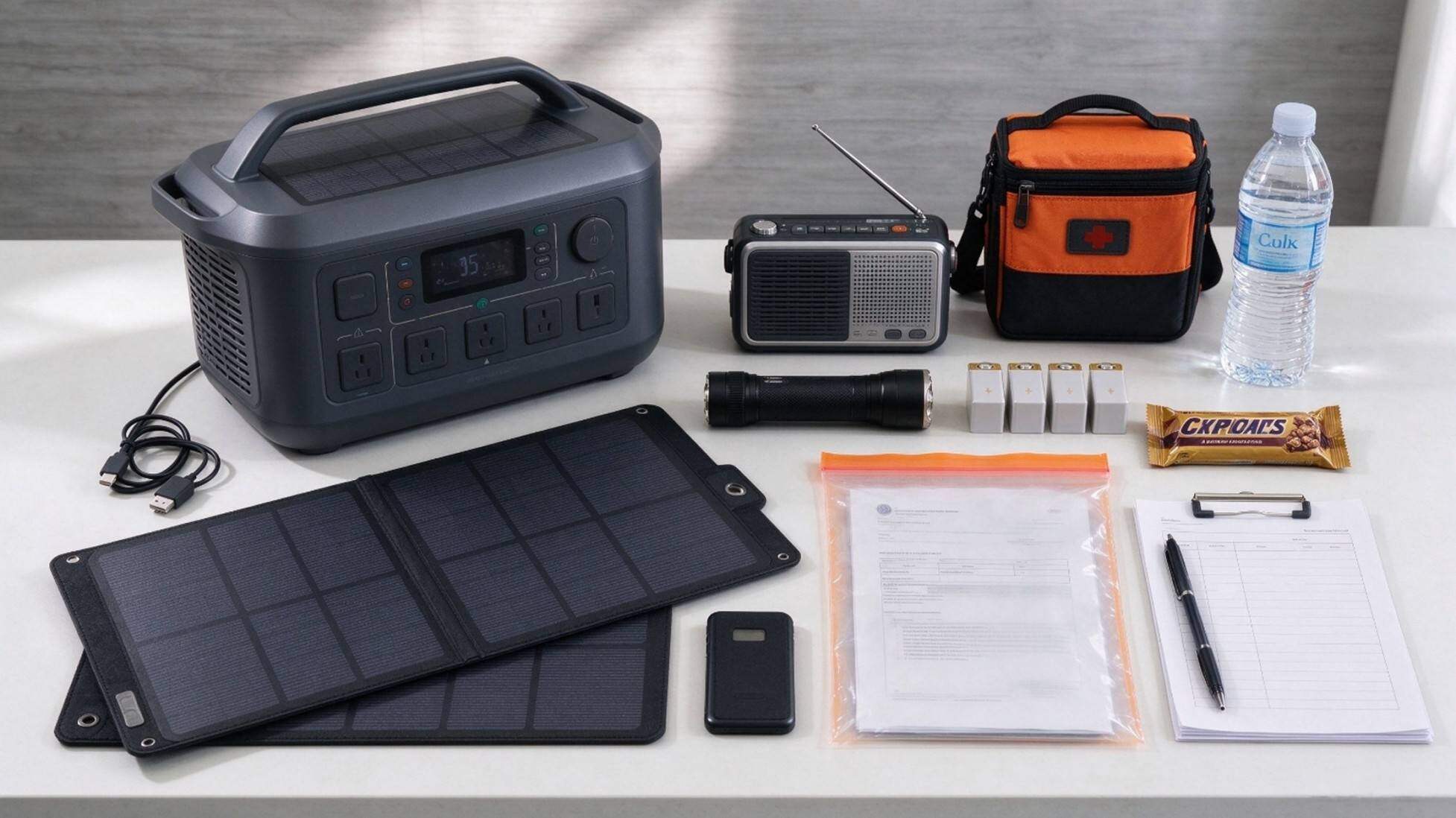
How long do power outages last?
There is no dependable single duration. A local switching problem may be resolved quickly, while wind, flooding, ice, fallen trees, damaged substations, or blocked roads can extend restoration. The utility's current estimate is more useful than a national average for a live event.
The latest complete federal annual figure gives useful planning context, but it is often misread. The U.S. Energy Information Administration reported that the average U.S. customer experienced 11 total hours of non-momentary electricity interruptions during 2024. That is an annual total across interruptions, not a claim that a typical individual outage lasted 11 hours. Major events accounted for 80% of that year's interruption time, which helps explain why a quiet year and a destructive storm year can feel very different.
How long does a power outage last in your area?
A useful answer comes from three inputs: the cause, the damage footprint, and the utility's restoration notice. Record when service stopped, check the official outage map, and plan in stages instead of guessing one return time.
|
Time without utility service |
Household decision |
Power priority |
|
Under 30 minutes |
Confirm the outage and keep refrigerator doors closed |
Phone, weather alerts, one efficient light |
|
30 minutes-4 hours |
Gather medication guidance, water, layers, and cooling supplies |
Communications and necessary medical equipment |
|
4-12 hours |
Reassess food temperature and indoor heat or cold; charge in shifts |
Add a fan or compatible refrigerator only after checking watts |
|
12-24 hours |
Follow utility updates and consider relocating vulnerable people |
Preserve battery for health, alerts, and essential lighting |
|
More than 24 hours |
Use the household's relocation trigger; do not wait for discomfort to become an emergency |
Rotate only planned loads and recharge when conditions permit |
Do not turn EIA's annual statistic into a runtime promise. For your plan, use at least three scenarios: four hours, one day, and several days. Then decide what would make you leave, such as an unsafe indoor temperature, depleted medical-device backup, an evacuation order, or loss of safe water.
Build one plan for every hazard
A long supply list is less useful than a short plan everyone can follow in the dark. Put the plan on paper and keep a copy with the emergency kit.
|
Planning area |
Before the event |
When conditions worsen |
After the event |
|
Alerts |
Enable local alerts and keep a battery weather radio |
Follow the latest official instruction |
Wait for the all-clear before returning |
|
Evacuation |
Map two routes and one meeting place |
Leave when ordered or when natural tsunami signs appear |
Avoid damaged roads, water, and structures |
|
Shelter |
Choose a tornado-safe room and a separate evacuation destination |
Move early; bring shoes, medication, and head protection |
Check injuries before checking property |
|
Water and food |
Store several days of water and familiar shelf-stable food |
Keep cold-storage doors closed |
Discard unsafe or contaminated food |
|
Electricity |
List essential devices, watts, connectors, and runtime |
Run only verified compatible loads |
Inspect cables and equipment before reuse |
|
Communication |
Choose an out-of-area contact and printed numbers |
Prefer brief texts when networks are busy |
Tell the contact when the household is safe |
Include pets, mobility needs, refrigerated medicine, hearing aids, and electrically powered medical equipment. Ask the medical provider and equipment supplier for a written outage plan. A general article cannot determine a safe interruption time for a specific treatment or medication.
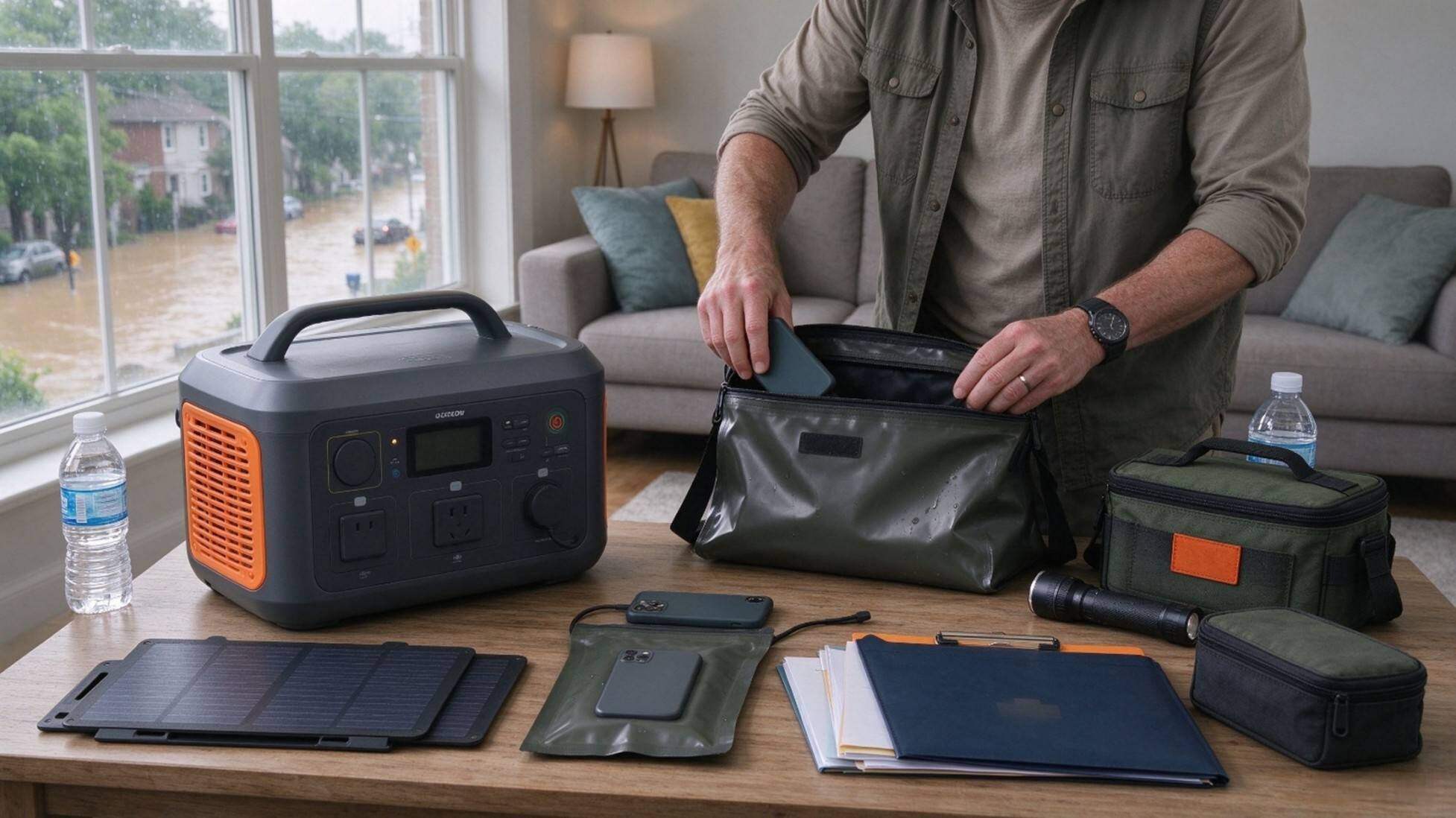
How do you prepare for a tsunami?
Prepare for a tsunami by learning whether you are in a mapped hazard zone, choosing a walking route to high ground or inland, practicing it, and setting several ways to receive warnings. NOAA explains that a natural warning can be a strong or long earthquake, an unusual rise or fall of the sea, or a loud ocean roar. If you notice a natural warning in a hazard zone, move as soon as you can do so safely; do not wait for a phone notification.
The U.S. tsunami warning centers' preparedness guidance recommends planning routes from the places you regularly visit and preparing to evacuate on foot because damaged or congested roads may not be usable. Keep a small grab bag near the exit with water, medication, sturdy shoes, a light, a whistle, identification copies, and a compact phone power bank.
How do you prepare for tsunamis when traveling?
Ask the hotel, campground, school, or host whether the property is inside a tsunami hazard zone. Photograph the posted evacuation map, walk the route in daylight, and identify the first safe destination before visiting the beach. Do not assume that a rental car will be the fastest way out. A walkable route may be more dependable when roads are crowded.
How to prepare a tsunami plan for your household
The phrase "how to prepare a tsunami" usually means how to prepare for one; people cannot prepare or control the hazard itself. Write the plan around actions the household can control:
- Mark the hazard zone and safe destination.
- Choose a primary and alternate walking route.
- Decide who helps children, older adults, pets, or anyone with limited mobility.
- Practice without relying on mobile data.
- Set an out-of-area contact.
- Leave room in the plan for local instructions, which override a generic checklist.
How to prepare for a tsunami after an earthquake
Protect yourself during the shaking first. When it stops, move quickly away from the coast if you are in a hazard zone and experienced a natural warning. Stay away until officials say the danger has passed. A tsunami is a series of waves, so the first arrival may not end the threat.
Do not delay evacuation to collect a large battery station. A compact light or phone battery already in the grab bag is useful; heavy equipment that slows the route is not.
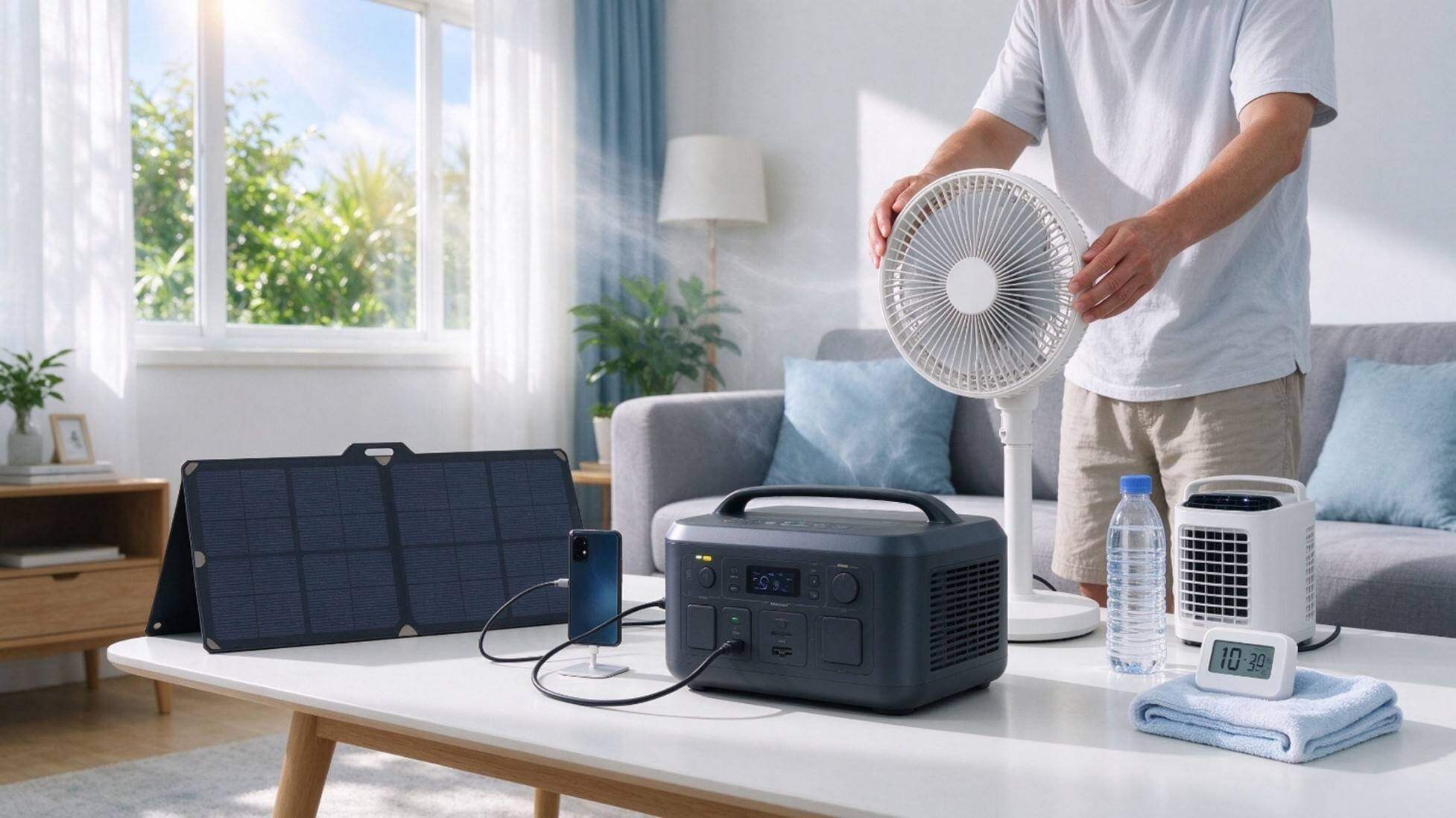
How to survive a tornado
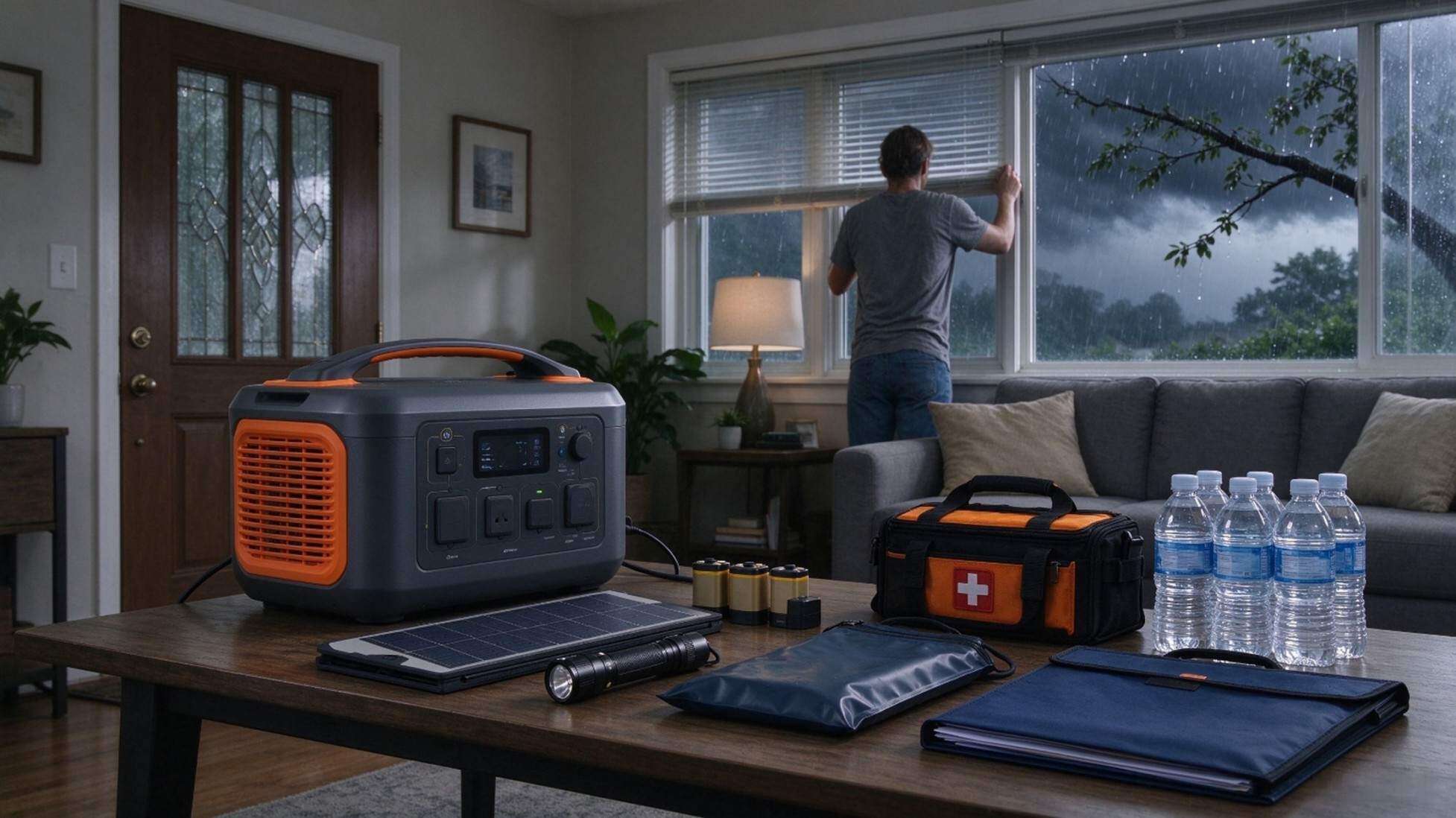
Surviving a tornado depends on reaching a sturdy shelter before the strongest winds arrive. Go to a basement, storm shelter, or small interior room on the lowest floor, away from windows. Protect the head and neck. Wear shoes because broken glass and debris may cover the floor afterward.
Choose the room now, not during the warning. Keep a light, charged phone, weather radio, first-aid supplies, helmet or other head protection, and closed-toe shoes there. If the household includes someone who cannot use stairs quickly, build that constraint into the shelter plan and seek local professional advice on an accessible safe space.
A watch means conditions can support tornadoes; a warning means take protective action for the warned area. Do not spend warning time watching the storm, moving outdoor items, or connecting backup equipment. Shelter first.
When is tornado season in Oklahoma?
Oklahoma does not have a closed season with safe months on either side. Spring is the main planning period, and households should be fully ready before March, with particular attention through June. May is commonly the most active month in the state's historical record, but a warning on any date requires the same response.
Use the local forecast office rather than a generic calendar for daily decisions. Autumn severe weather also occurs, and an overnight warning can be harder to receive if phones are silenced. Keep at least two alert methods active while sleeping.
When is tornado season in Texas?
Texas has no single statewide tornado season. In the National Weather Service record for western North Texas, April through June form the main historical cluster and May has the highest total. Other parts of the state have different patterns, so those months should not be applied as a precise statewide range.
The practical answer is to finish drills and equipment checks before March, then keep alerts active year-round. Use your local National Weather Service office's records and county emergency guidance because North Texas, the Panhandle, the Gulf Coast, and far West Texas do not share one monthly pattern.
When is hurricane season in the Bahamas?
The Bahamas is in the Atlantic basin, so its official hurricane season runs from June 1 through November 30. Historical Atlantic activity is highest around September 10, and most activity occurs between mid-August and mid-October. Those are climatological patterns, not a trip-specific forecast.
Prepare before June if you live in the Bahamas. If you are visiting, review the latest forecast, lodging evacuation information, airline or ferry rules, and travel coverage before departure. A named storm is not the only concern; flooding, wind, marine conditions, and extended utility interruptions can affect islands away from the forecast center line.
When is the hurricane season for the Bahamas, and when should you prepare?
Use June 1-November 30 as the official season and complete household preparation in May. Recheck supplies and contacts before the historical peak period. If local authorities order an evacuation, leave according to their route and schedule rather than waiting to finish charging equipment.
How to stay warm during a power outage
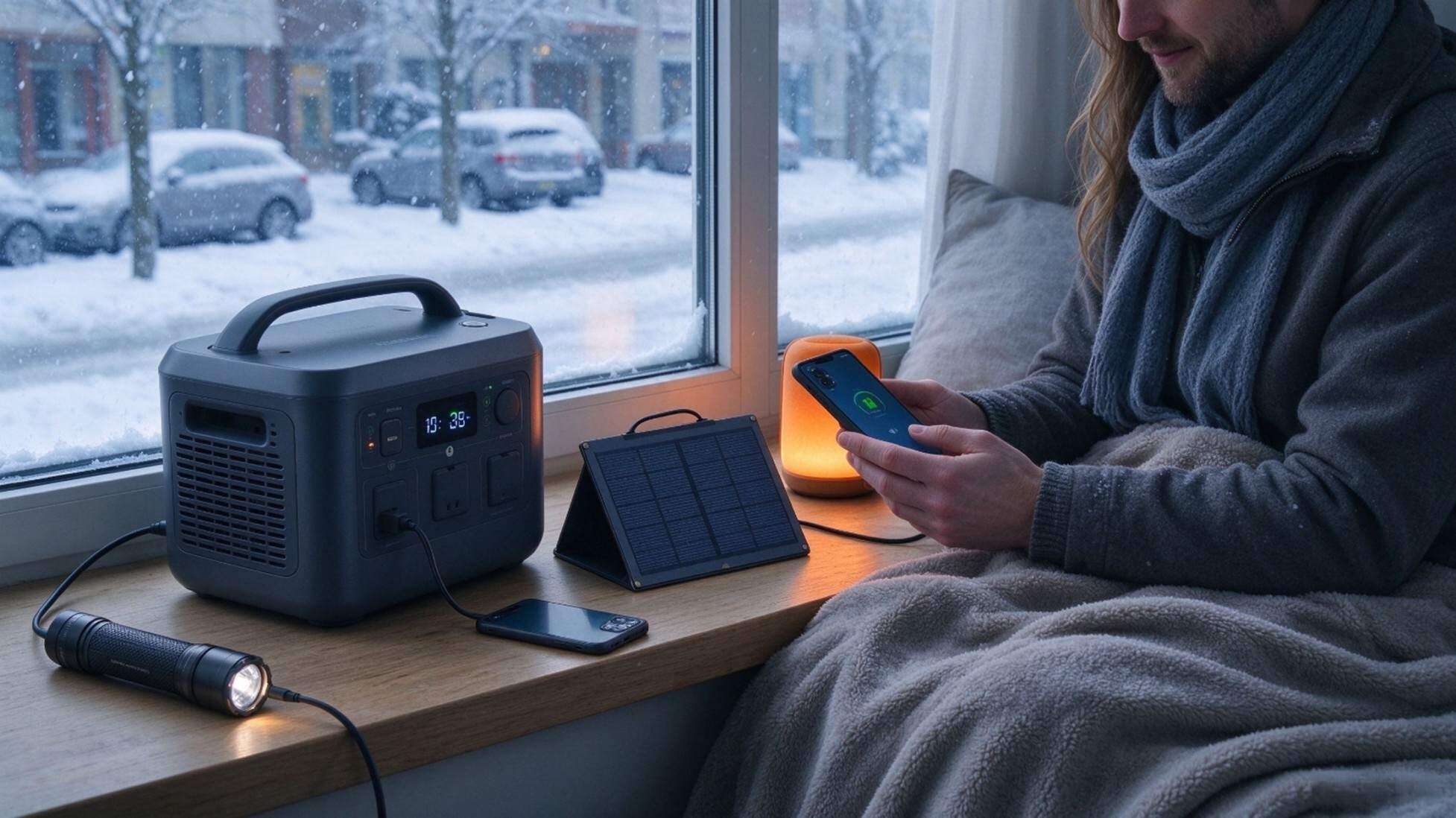
Start by trapping existing heat. Close doors to unused rooms, block obvious drafts with rolled towels, close curtains at night, and have everyone use one safe room if local guidance supports staying home. Wear dry layers, including socks and a hat, and use blankets or sleeping bags. Eat and drink regularly, but avoid alcohol because it can distort the sense of warmth.
How to stay warm without power when indoor conditions keep falling
A power station is not a reason to remain in an unsafe building. If the home is becoming dangerously cold, move to a powered location or emergency shelter early, especially with infants, older adults, or anyone with medical risk.
|
Condition |
Low-power action |
Relocation trigger |
|
Cool but stable room |
Add dry layers, close unused rooms, and reduce drafts |
A vulnerable person cannot remain comfortably warm |
|
Falling indoor temperature |
Use sleeping bags and share the safest occupied room |
Shivering persists, confusion appears, or local officials advise leaving |
|
Need for information |
Run one phone and weather radio in charging shifts |
Alerts cannot be received reliably |
|
Need for electric heat |
Compare the heater's continuous watts with station output and energy |
Do not depend on a small battery station for long-duration space heating |
|
Suspected hypothermia |
Seek urgent medical help and follow dispatcher instructions |
Immediate action; do not wait for utility restoration |
Heating devices consume energy quickly. Even when a heater's watts fit an outlet, battery runtime may be short. Never improvise household wiring or connect a portable station to a wall receptacle. Use the station as an independent source for compatible devices.
How to stay cool without AC
Reduce heat entering the home during the day: shade sunny windows, close curtains, and avoid using heat-producing appliances. Drink water regularly, wear light clothing, reduce activity, and use cool showers or wet cloths. At night, ventilate only when outdoor air is cooler and conditions are safe.
A fan can improve comfort, but it does not make extremely hot air safe. Track indoor temperature and symptoms, check neighbors, and know where a powered cooling location is. Confusion, fainting, worsening nausea, or very hot skin can signal a medical emergency; call emergency services rather than trying another household trick.
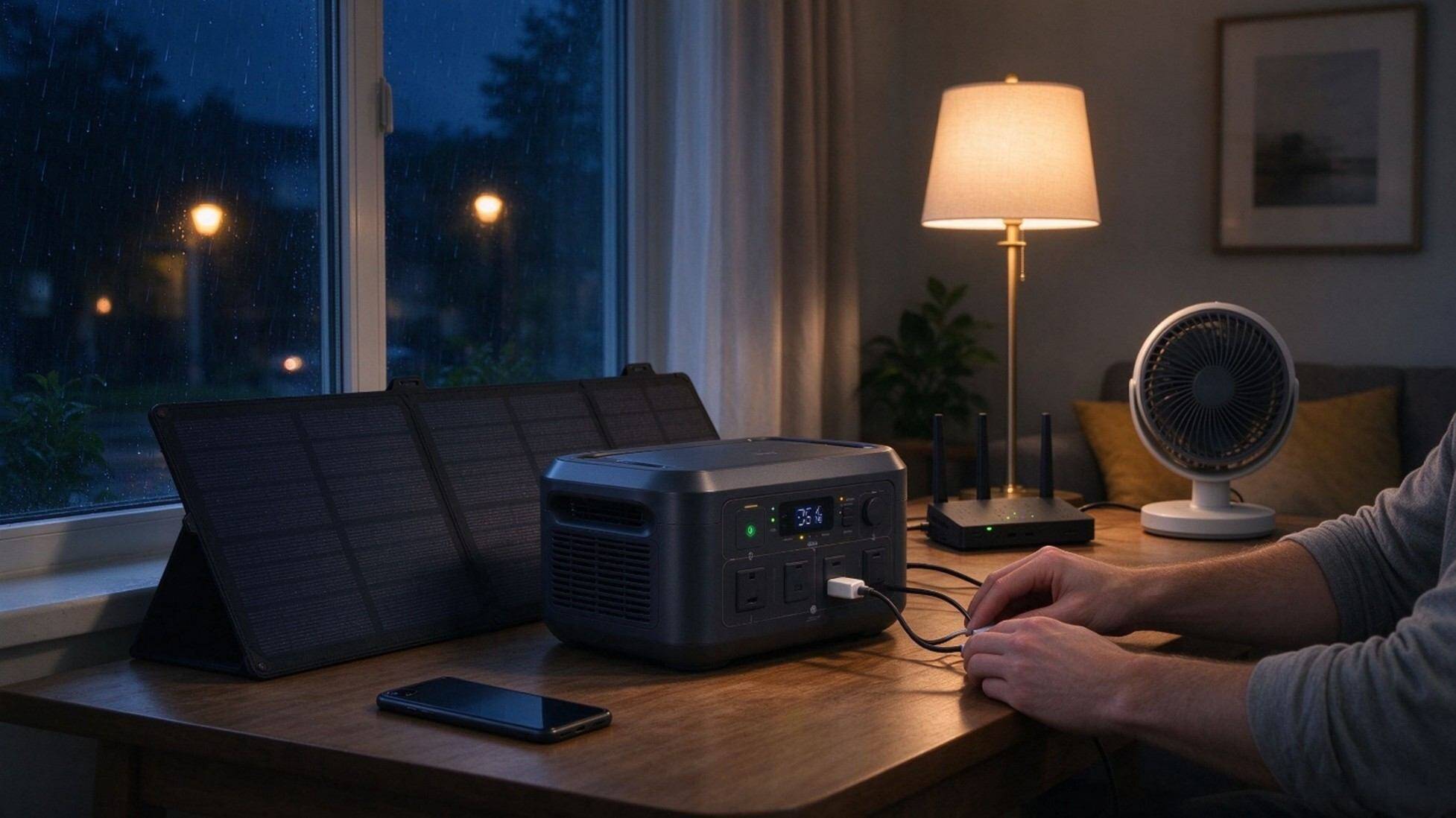
If a small fan is part of the backup plan, verify its watts and runtime before hot weather. Do not reserve the entire battery for comfort while leaving phones, alerts, or medical needs without power.
Plan battery backup around essential loads
Battery backup works best when the household decides in advance what it will not power. Write down each load's rated watts, startup demand if applicable, daily hours, and connector. Watt-hours describe stored energy; watts describe the rate of use. Both matter.
|
Load |
Planning question |
Suitable backup approach |
Common mistake |
|
Phone and weather radio |
Which cable and how many recharges? |
USB or USB-C battery output |
Leaving every device plugged in continuously |
|
LED light |
How many watts and hours each night? |
One or two efficient lights |
Lighting empty rooms |
|
Fan |
What is its measured running power? |
Timed use from a compatible output |
Treating airflow as protection from extreme heat |
|
Refrigerator |
What are running and startup watts? |
AC-equipped station with verified voltage, frequency, and surge margin |
Choosing by watt-hours alone |
|
Electric medical device |
What does the provider-approved outage plan require? |
Dedicated, tested backup and early relocation trigger |
Relying on a generic runtime estimate |
|
Space heater |
How high is its continuous load? |
Usually prioritize relocation and passive warmth |
Expecting a small station to heat a room overnight |
Estimated runtime (hours) = station capacity (Wh) × planning efficiency factor ÷ average load (W)
The efficiency factor is an assumption that covers conversion losses, reserve, and operating conditions. It is not a fixed product promise. For cycling loads, measure average energy use over a representative period and separately confirm startup power.
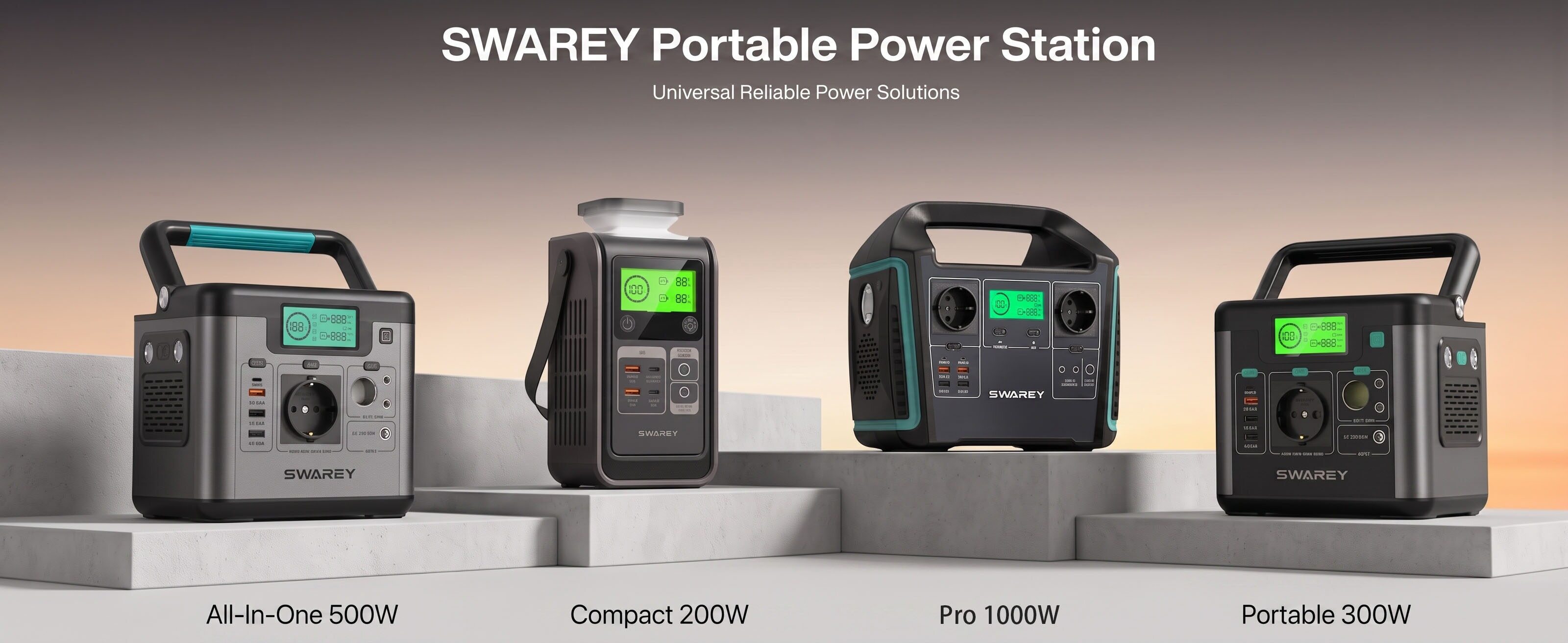
SWAREY lists several choices for different load types. The S200 portable power station has 192Wh of capacity, two 140W USB-C ports, USB-A outputs, and DC output, but no AC outlet; it fits communications and compatible DC loads rather than ordinary AC appliances. The S160 portable power station is listed at 222Wh with 300W continuous AC and 600W peak output.
For a larger planned load set, the S500 portable power station is listed at 518Wh, 500W continuous AC, and 1,000W peak output. The S1000 portable power station is listed at 725Wh, 1,000W AC, and 1,500W peak output. Product pages reviewed for this article show 220-240V, 50Hz AC specifications, so confirm the appliance and regional version before purchase or use.
A SWAREY BS-100 100W portable solar panel can add a daytime charging path where conditions are safe. Its 100W nameplate is not constant real-world output. Shade, clouds, sun angle, temperature, cable loss, and the power station's input limit all affect collection. Never set up a panel outdoors while authorities advise sheltering from a storm.
Frequently asked questions
How long do power outages last after extreme weather?
They can last from minutes to several days because the damage and repair access differ by event. Use the utility's current restoration estimate, plan in stages, and set health-based relocation triggers instead of relying on a national average.
How do you prepare for a tsunami if there is little warning?
Know the natural warning signs and practice a walking route to high ground or inland before the event. If you are in a hazard zone and experience a natural warning, move as soon as it is safe to do so rather than waiting for a phone alert.
How to survive a tornado in a house without a basement?
Go to a small interior room on the lowest floor, away from windows, and protect your head and neck. Choose and equip that room before severe weather begins.
When is hurricane season in the Bahamas?
The official Atlantic hurricane season is June 1 through November 30. Historical activity is highest around September 10, but storms can form outside the official window.
How to stay warm during a power outage overnight?
Use dry layers, blankets or sleeping bags, close unused rooms, and move to powered shelter if the building becomes unsafe. Do not assume a portable battery can support high-wattage heating through the night.
How to stay cool without AC during a long outage?
Drink water, reduce activity, block daytime sun, use cool water on the body, and go to a powered cooling location before heat becomes dangerous. A fan may improve comfort but cannot make every temperature safe.
Final preparedness checklist
- Identify local hurricane, tornado, tsunami, heat, and cold risks.
- Enable at least two warning methods.
- Practice evacuation and shelter routes with every household member.
- List medication, mobility, pet, and medical-device needs.
- Store water, shelf-stable food, lights, batteries, and printed contacts.
- Record essential electrical loads in watts and watt-hours.
- Test compatible cables and devices before severe weather.
- Set clear relocation triggers for heat, cold, medical needs, and prolonged outages.
- Keep portable power independent from household wiring.
- Follow current local instructions even when they differ from this general guide.
Publication notes and verification limits
- Weather scope: Hurricane dates and climatology were checked against the National Hurricane Center on October 12, 2026. Tornado timing is a planning description, not a forecast or a closed season.
- Outage scope: The EIA figure is the 2024 U.S. annual average interruption time per customer. It does not predict the length of one outage.
- Safety scope: Local emergency management, medical providers, utilities, and weather offices override this general guide.
- Product scope: Linked SWAREY capacities, outputs, ports, and charging details were checked on October 12, 2026. Availability and specifications may change.
- No performance claim: No customer runtime or extreme-weather test was supplied. Runtime depends on measured load, conversion loss, battery state, temperature, and operating conditions.
- Items requiring confirmation before publication: byline, target sales region, regional product voltage, current inventory, local evacuation resources, and any device-specific medical backup requirement.
Subscribe To Our Newsletter
You Can Get The News Of Our Products
SIGN UP
Making every connection simpler, and every charge more valuable.
Payment Methods